Last week, I listened to my students’ podcasts with my head back and my eyes closed, fully immersing myself in them. I’m telling you, each of these is a meditation. They are so life affirming. My students put themselves out there and I so hope you take the time to give each a listen.
I have more of these but haven’t yet heard back to get those students’ permission to share. So, maybe I’ll have more for you in the near future.
Below are the podcasts from my students who have given me permission to share with you. Their vulnerability had made for some great art.
It’s an honor to host them here, really, it is.
First, to give you context for the students’ task, here is the meat of the assignment prompt (or just scroll down to the podcasts and enjoy):
Unit 1 Final Project: “The Slowdown”-Style Poetry Podcast (A Process-Based Creative Project)
Overview
For the final project in our poetry unit, you will create your own short podcast episode inspired by “The Slowdown.” Like the podcast episodes you’ve been listening to, your episode will slow the listener down, offer context, and make space for a poem to be heard and felt.
This project is not about performance, polish, or sounding impressive. It is about voice, attention, curiosity, imagination, and process.
You will:
· Create your own original poem as an allusion to the style of either “Shanghai” or “The Last Son of China”
· Write and revise a spoken introduction to that poem
· Record your final draft version of “The Slowdown”-style podcast episode, after you...
· Create & revise your podcast recording through a process of completing a video prewriting journal, developing your rough draft, receiving then applying professor & peer feedback, processing your revision work in a video journal, and completing your final revisions.
· Publish your episode on Substack
We are doing this project in stages because we value process over product. Your commitment to your writing process will lead you to a final product you can be proud of.
Step 1: Immerse Yourself in “The Slowdown”
Before you begin planning your own episode, return to “The Slowdown.”
§ Speaks thoughtfully and personally about the poem
§ Leaves space for meaning rather than explaining everything
§ Reads the poem with care
This step is about listening and noticing, not copying or scripting.
Step 2: Choose Your Allusion Path
Your poem must allude to one of the following poems through form and context, not content. You can also use any tone that suits your desire and imagination. As for the content, that is completely up to you, your imagination, your “story,” and your creativity.
Choose either Option A or Option B
Option A: Allusion to Wang Ping’s “The Last Son of China”
· Inspired by a one-sided phone call or text message
· The speaker responds to what the other person might be saying, even though we never hear their voice, though you can “speak for them” in the way Wang Ping does for Weiwei in her imagination. This person might not necessarily be human or alive; it’s your poem and your choice.
· You are encouraged to play with pauses, repetition, fragments, and punctuation; consider using a similar form of a type of paragraph/block form, as opposed to what we see in the other poems we have studied, which look much more like the stanzas we expect from poetry.
· Emotional weight, concern, or urgency may be present, though you may play with the tone, such as if you prefer humor, romance, or any other tone that fits what you want to do.
· The title is a name or nickname for the person the speaker is trying to talk to/talking to in a one-sided “conversation”/dialogue.
Option B: Allusion to Megan Fernandes’s “Shanghai”
· Inspired by movement through a place
· Stream-of-consciousness or observational structure, through the point of view of the speaker (the poet).
· The poem unfolds all in a long, single stanza, with shorter lines, through noticing and shifting thoughts, creating a sense in the reader that we are looking through the poet’s eyes: seeing and feeling her senses as she moves through the setting of her poem.
· The speaker encounters at least one companion along the way: this can be human, animal, or imagined other, even a ghost.
· The title names the place where the speaker is writing about.
You are choosing one of the poems above to allude to with your poem. The allusion refers to what I’ve listed above, though you can include even more characteristics that allude to your chosen poem if you want. Choose the path that feels most interesting or meaningful to you. Trust your curiosity and follow your creativity.
Writing the Introduction
Your introduction will be spoken, not read like an essay. When spoken aloud, it should be about 2–3 minutes.
Think of the introduction as a way to invite the listener in, not to explain everything.
Your introduction should do most of the following:
· Greet the listener in a simple, natural way
· Let the listener know you are about to share your own original poem
· Name which poem you are alluding to (”The Last Son of China” or “Shanghai”)
· Share something meaningful about your writing process, such as:
o Why this form caught your attention: what about the poem (”Shanghai” or “The Last Son of China,” whichever one you chose) you are connecting with, what you find interesting or impactful, etc.
o What you found challenging or unfamiliar in your own writing process (you can include your reading process, too, if you like)
o What you noticed as you experimented with the form
o What questions or curiosities guided you while writing your poem
o Speak a little bit about your poem, something that you find meaningful to you or something related to your purpose for writing it how you did.
You do not need to:
· Summarize or analyze the original poem
· Explain your poem line by line
· Sound confident or certain--you don’t need to come off like you are a professional; you’re a student who is learning and taking some creative risks. That’s reason enough to impress me
· Sound like you have memorized any of this (though you should practice a bit)
It is okay to say things like:
· “I wasn’t sure where this was going at first…”
· “What interested me most about this form was…”
· “I kept noticing that I returned to…”
Avoid using AI to generate this introduction. I want to hear you thinking through your experience in your own words.
Writing the Poem
Your poem should:
· Be original and written by you
· Clearly reflect the form and structure of your chosen poem
· Use form as a way of thinking, not just a shape to copy
As you draft and revise, think about questions like:
· How does this form shape the speaker’s voice?
· What does this structure allow me to say that a traditional paragraph might not?
· Where do pauses, fragments, repetition, or movement feel necessary?
· What moments feel honest, uncertain, or surprising?
You are encouraged to:
· Experiment
· Follow your curiosity
· Let the poem change as you work on it
· Avoid overthinking or worrying if your poem “good enough” or “needs to be perfect” or “be professional”
Do not use AI to write your poem or to “improve” it. Poetry grows out of attention, memory, imagination, and lived experience. Roughness and imperfection are part of that process. Your final draft of your poem might still be “rough,” and that’s okay! A piece of art cannot be necessarily finished within just a couple of weeks.
Step 4: Share Your Google Doc With Me
Once your document includes both rough and final drafts, share it with me.
Sharing Instructions
1. Click the Share button in Google Docs.
2. Enter this email address: (I’ve removed it for this post)
3. Set access to Editor.
4. Click Send.
Sharing the document allows me to see your process, not just your final product.
Step 5: Create and Record Your Podcast Episode
Your final recording should be about 6 minutes total and include:
Part 1: Introduction (2–3 minutes)
Use your final draft introduction as your guide. You do not need to memorize it.
Part 2: Read Your Poem
Read your poem slowly and clearly. Allow pauses.
You may record audio only or video.
Aim for presence, not perfection.
Step 6: Publish on Substack
1. Create a free Substack account.
2. Publish your podcast episode as a post.
3. Include:
o A title
o A short written description
o Your audio or video recording
This is about sharing your voice, not building a brand.
Step 7: Transcript
(A transcript is required only if your final recording differs in some ways from the written text/script, such as if you ad lib in the recording)
Submit a full transcript of your recording. The transcript needs to be made AFTER your finish your final draft.
Use a transcription app rather than AI writing tools. Free options include:
· If you use the podcast feature n Substack (doing “New Podcast”, as opposed to doing “New Article” for your post), there is a tool that will generate your transcript
· Otter.ai
· Google Docs voice typing
· Microsoft Word Dictate
· Apple Voice Memos + transcription
· YouTube auto-captions
Review for clarity. Minor errors are fine.
Step 8: Rough Cut, Peer Review, and Revision
This project happens in stages:
· Rough cut/rough draft
· Peer review
· Revision
· Final submission
We are practicing writing as a process, not chasing a perfect outcome.
I go on from there with more guidance and support. During this unit, the students study a list of poems, including “Shanghai” and “The Last Son of China,” examining literary techniques and their own personal connection to each poem.
Then we work through Weeks 4, 5, and 6, scaffolding, breathing, processing for this project…
Below is one batch of these amazing students’ podcasts. Please do slow down and enjoy. I know I did.
Join the chat! I would love to learn about your experience listening to any or all of these podcasts. I will be returning to them again and again for a slow-down. Thank you for being a part of this experience.
And if you are looking for more poetry experiences, check out Dr. Andy’s Poetry and Technology Hour on KDVS. You can subscribe to the podcast, too, if you miss it on the radio. Last week, he took a moment to read one of the all-time best poems about being an American college student: Langston Hughes’ “Theme for English B”. Thanks Andy! You can also read Andy Jones’ work here on Substack. It’s always great.
This Substack is reader-supported. To receive new posts and support my work, consider becoming a free or paid subscriber.
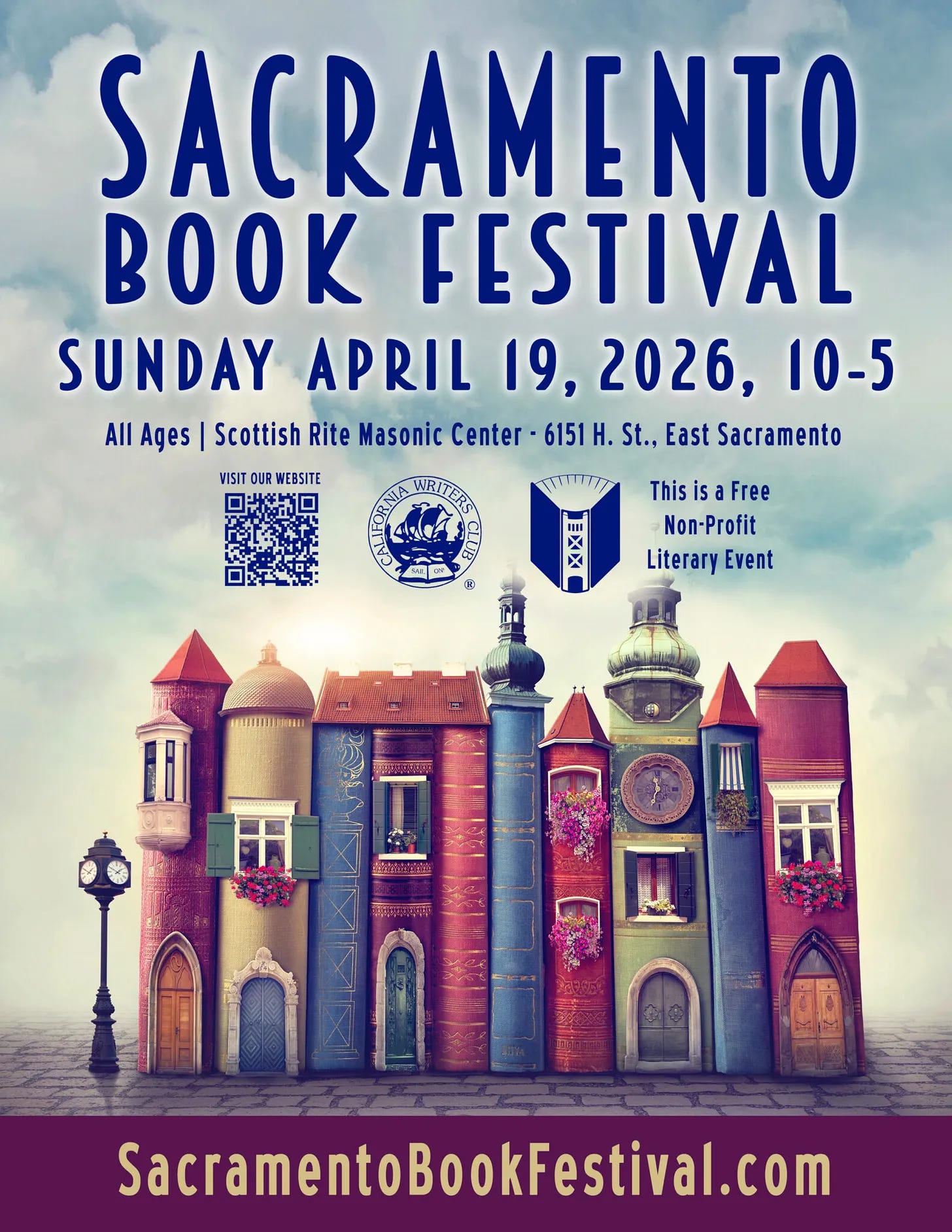
I will be participating in the event below! Save the date. I don’t get out often, and I would LOVE to see you!
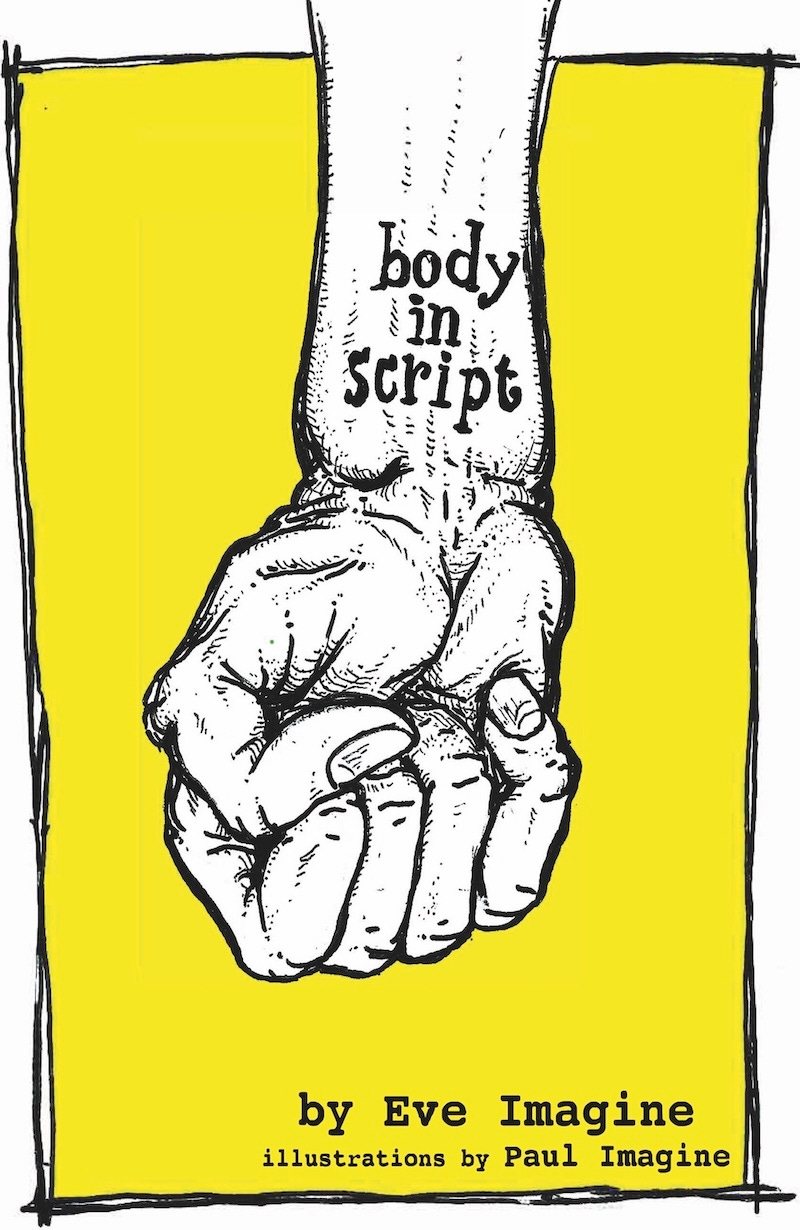
Want more of Eve’s writing and Paul Imagine’s drawings? You can get my book: Body in Script, available at many online retailers.
You can find it at my publisher’s bookstore, or other places, like Amazon. Or, chat with me here. If you’re local, come get one from me personally. I would love that!